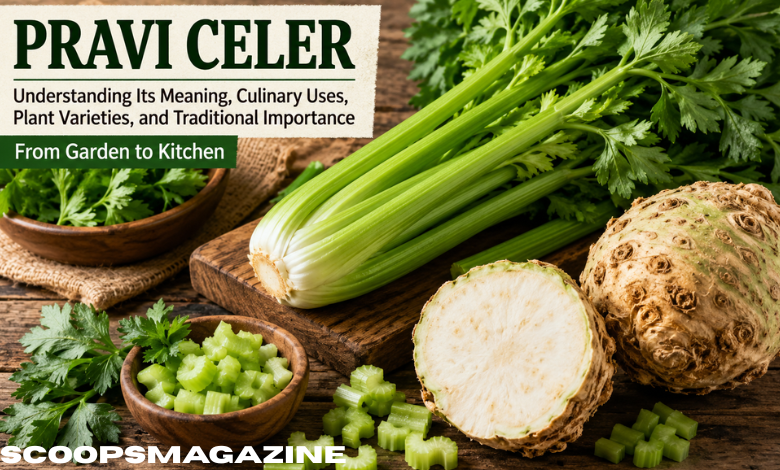
Pravi Celer is a term that attracts attention because its meaning is not immediately clear to English-speaking readers. The phrase is associated with celery, but understanding it requires more than simply thinking about the green stalks commonly found in grocery stores. In regional European language and food culture, the term can refer to celery as a complete plant and to its established role in traditional cooking.
The subject covers several areas, including language, botany, gardening, food preparation, and nutrition. Celery has been cultivated and used for generations, with its leaves, stalks, seeds, and underground portions serving different purposes. Learning about Pravi Celer therefore provides a broader view of a familiar plant and explains why celery is treated differently across various food traditions.
What Is Pravi Celer?
Pravi Celer can generally be understood as a regional term connected with true or cultivated celery. The word “pravi” is commonly associated with meanings such as real, genuine, or true, while “celer” refers to celery. Together, the words point toward the recognized celery plant rather than an unrelated plant with a similar appearance or name. From a botanical perspective, the term is linked with Apium graveolens, the species from which familiar celery forms are derived. Depending on the cultivated variety, growers may focus on the stalks, leaves, or enlarged root structure. This explains why people from different countries can have different ideas about what celery should look like.
For some consumers, celery means long, crisp green stalks. For others, the word immediately brings to mind a round, rough root vegetable or strongly scented leaves used in soup. Pravi Celer is useful as a topic because it brings these different forms of celery into one discussion.
Understanding the Plant Behind the Name
Celery belongs to the Apiaceae plant family. Several familiar vegetables and herbs are members of the same family, including carrots, parsley, parsnips, and fennel. Many of these plants are recognized for their distinctive aromas, and celery is no exception. The plant develops upright stems and divided leaves, while its underground growth varies according to the cultivated type. Some celery varieties are grown specifically to produce large stalks. Others are selected for their leaves, and certain forms develop an enlarged edible structure commonly known as celeriac.
The smell of celery is one of its easiest identifying features. Cutting the stalks or leaves releases a strong plant aroma that becomes even more noticeable during cooking. This characteristic is one reason celery is frequently added to broths and slow-cooked meals.
Why Pravi Celer Can Cause Confusion
The main source of confusion surrounding Pravi Celer is the difference between regional terminology and standard English food vocabulary. An English-speaking shopper may associate celery exclusively with packaged stalks, while someone familiar with Central, Eastern, or Southeastern European cooking may think about the entire plant. Internet content can make the subject even less clear. Some pages describe Pravi Celer as if it were a newly discovered food, unusual supplement, or separate plant species. In reality, the phrase is more accurately understood through its linguistic, botanical, and cultural background.
Differences between celery varieties also contribute to uncertainty. Leaf celery, stalk celery, and celeriac can look quite different even though they are closely related. A person unfamiliar with these cultivated forms may assume they are entirely separate vegetables.
The Historical Background of Celery
Celery has a much longer history than its current popularity as a low-calorie snack. Its development as a cultivated food plant took place over generations, with different regions selecting varieties for particular culinary purposes. Earlier forms of celery were often stronger in taste and aroma than many commercial varieties available now. As cultivation methods developed, growers selected plants according to desirable characteristics. Some focused on larger and less bitter stalks, while others encouraged stronger leaf production or enlarged underground growth.
The history of celery also shows how food plants change when they move between regions. Climate, soil conditions, cooking habits, and local preferences all influence which forms become popular. As a result, celery developed different culinary identities across Europe and other parts of the world.
Pravi Celer in Traditional Cooking
One of the most practical ways to understand Pravi Celer is through its use in the kitchen. In many traditional households, celery is not eaten only as a raw vegetable. It serves as an ingredient that contributes aroma and flavor to cooked meals. Leaves may be chopped and added to soups, stews, or stocks. Stalks can be cooked with onions and other vegetables to create a flavorful base. Root forms may be peeled, sliced, grated, roasted, boiled, or added to slow-cooked dishes.
This broader use of the plant reduces waste and allows cooks to take advantage of its different characteristics. The leaves provide strong aroma, the stalks contribute texture and freshness, and celeriac offers a denser consistency that works well in cooked recipes.
The Difference Between Stalk Celery and Celeriac
Stalk celery and celeriac are closely related, but they are grown for different features. Stalk celery is cultivated mainly for its long, firm stems. These are the parts commonly sold in supermarkets and used in salads, snacks, juices, and cooked dishes. Celeriac is grown primarily for its enlarged underground structure. Its outer surface is rough and irregular, but the flesh inside can be prepared in several ways. It may be mashed, roasted, boiled, grated into salads, or included in soups.
Their flavors are related, although celeriac is generally denser and more earthy in taste. Stalk celery contains more water and has a crisp texture when eaten raw. Understanding this difference is important when discussing Pravi Celer because regional food traditions may place greater importance on the root or leaves than consumers accustomed to supermarket stalk celery would expect.
Nutritional Characteristics of Pravi Celer
Celery is widely known as a food with high water content. This characteristic makes fresh stalks light and crisp. However, focusing only on water and calories gives an incomplete picture of the plant. Celery contains dietary fiber and several vitamins and minerals. The exact nutritional composition depends on the variety, serving size, growing conditions, and method of preparation. Fresh stalks and celeriac also differ in their nutritional profiles because they are structurally different parts of cultivated celery forms.
Raw celery can be included in salads and light meals, while cooked celery can contribute flavor without requiring large amounts of heavy ingredients. Celeriac provides a more substantial texture and can be used as part of soups, side dishes, and vegetable-based meals. No single vegetable provides complete nutrition, so celery is best understood as one part of a varied diet rather than as a solution to specific health problems.
Why Celery Has Such a Strong Aroma
The characteristic smell of celery is an important part of its culinary value. Aromatic compounds in the plant produce the recognizable scent released when the leaves or stalks are cut. Heat changes how these aromas behave. Raw celery has a fresh and sharp quality, while cooked celery develops a softer flavor that blends with surrounding ingredients. This is why relatively small amounts can affect the overall character of a soup or broth.
Leaves often have a more concentrated aroma than the stalks. Cooks who understand this difference can adjust quantities according to the dish they are preparing.
How Pravi Celer Is Used in Soups and Broths
Soups are among the most common traditional uses for celery. The plant works particularly well with onions, carrots, potatoes, meat, herbs, and other vegetables. When cooked slowly, celery releases flavor into the surrounding liquid. The goal is not always to make the dish taste strongly of celery. Instead, it can become part of the background flavor that makes a broth feel more complete.
Celery leaves are especially useful for this purpose because of their noticeable aroma. They may be added during cooking and removed later, or chopped and left in the finished dish. Root celery can also be included in soup. It provides a different texture and can make vegetable-based dishes more filling.
Eating Pravi Celer Raw
Fresh celery stalks can be eaten without cooking. Their crisp texture makes them suitable for salads, vegetable plates, sandwiches, and simple snacks. Before eating raw celery, the stalks should be cleaned carefully to remove soil and debris. The bottom portion can be trimmed, and damaged areas should be discarded. Some mature stalks develop tougher fibers that people may prefer to remove.
Celery leaves can also be used raw in small amounts. Because their flavor may be stronger than that of the stalks, they are often chopped finely and mixed with other ingredients. Raw celeriac requires different preparation. The rough exterior must be removed before the inner flesh is sliced or grated.
Cooking Methods for Different Parts of Celery
The best preparation method depends on which part of the celery plant is being used. Stalks can be sautéed, boiled, steamed, braised, or roasted. They can also be chopped and cooked as part of a vegetable base. Leaves are usually used in smaller amounts because of their concentrated flavor. They work well in soups, sauces, stocks, and herb mixtures.
Celeriac can handle longer cooking methods. It may be roasted until tender, boiled and mashed, or cut into pieces for soups and stews. Thinly grated celeriac is also used in certain cold dishes. Using appropriate cooking methods helps preserve the qualities that make each celery form useful.
Growing Pravi Celer at Home
Growing celery requires patience. Compared with some common garden vegetables, it can take a relatively long time to mature and performs best when its basic growing requirements are consistently maintained. The plant generally prefers fertile soil and regular moisture. Inconsistent watering can affect stalk quality and overall development. Gardeners should avoid allowing the soil to remain extremely dry for extended periods.
Starting celery from seed can require careful attention because the seeds are small and early growth is slow. Some gardeners begin seedlings indoors before moving them outside when conditions become suitable. Local climate plays an important role in planting schedules. Gardeners should consider seasonal temperatures and growing conditions rather than following a single schedule designed for every region.
Harvesting the Celery Plant
Harvesting depends on the type of celery being grown. Stalk varieties can be collected when they reach a useful size and acceptable texture. Some gardeners harvest individual outer stalks, while others remove the entire plant. Leaf celery can be cut as needed, provided enough healthy growth remains for continued development. This makes it useful for households that regularly add fresh leaves to cooked meals.
Celeriac requires a longer growing period because the enlarged underground portion needs time to develop. Once harvested, it should be cleaned and stored under appropriate conditions. Proper timing can influence texture and flavor, so observation is often more useful than relying only on a fixed number of growing days.
How to Select Fresh Celery
Fresh stalk celery should generally feel firm rather than soft or flexible. The leaves should appear reasonably fresh, without extensive yellowing or decay. Color can vary between varieties, so darker green does not automatically mean better quality. Texture, smell, and overall condition are more useful indicators.
When selecting celeriac, buyers should look for a firm vegetable without large soft or rotten areas. The rough exterior is normal and should not be mistaken for poor quality. Choosing fresh produce improves both storage life and cooking results.
Proper Storage Methods
Celery can lose moisture and become flexible if stored poorly. Refrigeration helps slow this process. The stalks should be kept in conditions that reduce excessive moisture loss without encouraging decay. Celery leaves are more delicate and may deteriorate faster than the stalks. If they will not be used immediately, they can be separated and stored appropriately.
Celeriac usually lasts longer than fresh stalk celery when kept in cool conditions. Once it has been cut, however, the exposed surface should be protected and refrigerated. Freezing is another option for celery intended for cooked dishes. The texture may change after thawing, so frozen celery is generally better suited to soups, stocks, and stews than fresh salads.
Common Misunderstandings About Pravi Celer
One common misunderstanding is the idea that Pravi Celer is an entirely new vegetable. The phrase is connected to an established celery species and regional terminology rather than a newly created food. Another misconception is that celery is valuable only because it contains few calories. While its water content and light texture are well known, its culinary role is equally important. Celery has been used for flavor and aroma long before calorie counting became common.
Some people also assume that only the stalks are edible. In reality, different cultivated forms are valued for leaves, stalks, and enlarged underground portions. Understanding these points makes the subject easier to approach without relying on exaggerated or misleading claims.
Is Pravi Celer the Same Everywhere?
The basic botanical connection may remain the same, but celery is not used identically in every region. Different countries cultivate and prepare particular forms according to local food traditions. In some places, stalk celery dominates the market. In others, celeriac is a standard ingredient. Certain households regularly use celery leaves in soup, while other consumers may discard them.
These differences demonstrate how a single plant can develop several culinary identities. The term Pravi Celer is especially interesting because it reflects this broader understanding of celery rather than limiting attention to one supermarket product.
The Practical Value of Using the Whole Plant
Using more parts of celery can provide both culinary and practical advantages. Leaves that might otherwise be discarded can season soups or stocks. Stalks can be eaten fresh or cooked, while suitable root forms can become part of main meals and side dishes. This approach can reduce kitchen waste and help households get more use from purchased or home-grown produce.
It also encourages a better understanding of food plants. Many modern consumers see vegetables only after they have been cleaned, trimmed, packaged, and separated into market categories. Learning about the whole celery plant shows how different edible parts can serve different purposes.
Final Thoughts
Pravi Celer is best understood as a term connected with genuine or cultivated celery and its broader role in regional food culture. Rather than representing a mysterious new vegetable, it points toward a familiar plant with several forms, uses, and culinary traditions. The subject becomes clearer when celery is viewed as more than a bundle of green stalks. Different varieties may be cultivated for stems, leaves, or celeriac, and each form has its own practical applications. Celery can be eaten raw, cooked into soups, added to broths, roasted, stored for later use, or grown in home gardens.
Understanding Pravi Celer also highlights the differences between modern supermarket habits and traditional approaches to vegetables. In many kitchens, celery has long been valued for its aroma, versatility, and ability to contribute flavor to everyday meals. For readers searching for the meaning of Pravi Celer, the simplest explanation is that the term relates to true celery and the wider identity of the celery plant. Its importance comes not from being a new trend, but from its established place in gardening, cooking, and regional food traditions.