The word Pappedeckel often creates confusion because different websites describe it in completely different ways. Some incorrectly claim it is a digital component, a technology product, or a machine-related part. In reality, the word refers to a simple physical object made from cardboard or thick paperboard. It is commonly used as a cover, lid, protective layer, or disposable paperboard piece for packaging and serving products. Although many people search for the term online expecting something technical, its actual meaning belongs to the packaging and paper products industry. Whether used for food containers, beverage service, retail packaging, or promotional purposes, Pappedeckel represents an inexpensive and practical solution that has existed for well over a century.
Understanding its true meaning helps separate fact from misinformation while explaining why this ordinary cardboard product continues to play an important role in everyday life.
What Is Pappedeckel?
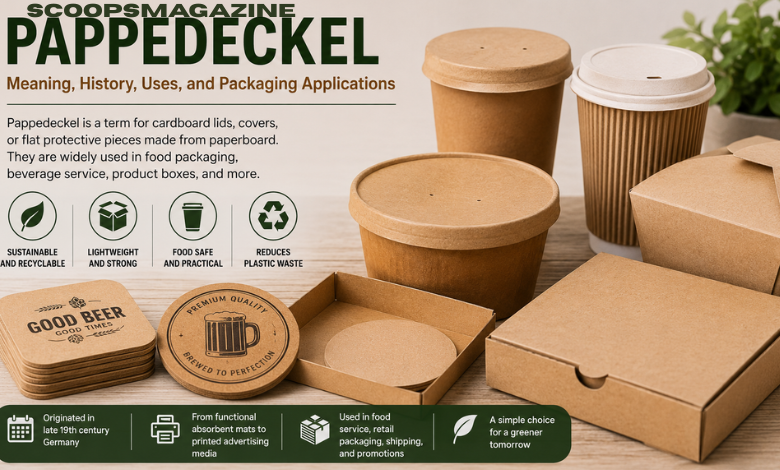
Pappedeckel is a German word that refers to a cardboard lid, cover, or flat protective piece made from compressed paper fibers. Depending on the product, it may be completely flat or shaped to fit a container or package. Its main purpose is to protect, close, separate, or support another item. The standard German spelling is usually Pappendeckel, while Pappdeckel is another accepted variation. In everyday conversation, these words may be used interchangeably depending on the region or context. Regardless of spelling, they describe products made from durable paperboard rather than plastic or metal.
A Pappedeckel may appear in coffee cup lids, takeaway food packaging, bakery boxes, shipping cartons, product inserts, bottle packaging, or promotional drink coasters. The design changes according to its intended use, but the material remains based on cardboard or heavy paperboard.
The Meaning Behind the Word
The word combines two German concepts. “Pappe” refers to cardboard or thick paperboard, while “Deckel” means lid, cover, or cap. Together, the word simply describes a cardboard cover. Its meaning is straightforward, yet online searches have created unnecessary confusion because unrelated articles have attached technology-related definitions to the term. There is no established evidence that Pappedeckel is the name of a computer chip, software system, or digital invention.
Instead, the word belongs to everyday packaging language and continues to describe practical cardboard products used across many industries.
How Pappedeckel Is Manufactured
Manufacturing begins with paper fibers obtained from wood pulp or recycled paper. These fibers are mixed with water before being pressed into thick sheets. The sheets are then dried, compressed, and cut into the required shapes. Some manufacturers apply food-safe coatings to improve resistance against moisture or grease when the product is intended for food packaging. Others leave the cardboard untreated for dry goods or shipping purposes.
Depending on the application, additional manufacturing steps may include:
- Die cutting into precise shapes
- Printing logos or product information
- Embossing designs
- Folding or creasing for packaging
- Lamination for additional protection
- Surface finishing for improved durability
The finished product is lightweight, stackable, and easy to transport in large quantities.
A Brief History of Pappedeckel
The development of modern cardboard covers is closely connected with Germany during the late nineteenth century. Before disposable paper products became common, reusable materials were often preferred despite hygiene concerns. One important development involved beer coasters. Earlier versions were made from felt, but they absorbed moisture slowly, were difficult to clean, and required repeated washing. Manufacturers searched for an alternative material that could absorb liquid while remaining inexpensive enough for single use.
Around 1880, German printer Friedrich Horn began producing cardboard beer mats made from wood pulp. Although early versions were relatively thin, they demonstrated the potential of disposable paperboard products. As manufacturing techniques improved, cardboard became stronger, more absorbent, and easier to print. Breweries soon realized that these simple coasters could also display company names, logos, and advertisements. What began as a practical absorbent surface gradually became a valuable promotional tool. This combination of functionality and advertising contributed to the widespread popularity of cardboard products throughout Europe.
Different Types of Pappedeckel
The term covers several forms rather than one single product. Different industries require different designs depending on their needs.
Cardboard Food Lids
Restaurants, cafés, and takeaway businesses often use cardboard lids for food containers. These covers help keep food protected during transport while reducing the use of plastic packaging.
They are commonly used for:
- Soup containers
- Salad bowls
- Dessert cups
- Ice cream packaging
- Fast food boxes
Many modern food-service companies prefer cardboard because it is lightweight and compatible with recyclable packaging systems.
Beverage Cup Covers
Hot drink containers increasingly use paper-based lids alongside traditional plastic alternatives. Cardboard beverage covers help reduce plastic consumption while providing sufficient protection during transport.
These lids are frequently used for:
- Coffee
- Tea
- Hot chocolate
- Cold beverages
- Specialty drinks
Manufacturers continue improving designs to increase leak resistance and drinking comfort.
Product Box Covers
Retail packaging often includes cardboard covers that protect products during storage and transportation.
Examples include:
- Cosmetic packaging
- Electronics boxes
- Gift packaging
- Pharmaceutical cartons
- Jewelry packaging
These covers provide both structural support and space for branding.
Shipping Protection
Many shipping cartons contain cardboard inserts that prevent products from moving during delivery. These protective pieces may also be described as Pappedeckel because they cover or separate packaged items.
Businesses use them to reduce damage during transport while avoiding heavier packaging materials.
Promotional Beer Mats
One of the most recognizable examples is the cardboard drink coaster found in restaurants, cafés, and pubs. Besides protecting tables from moisture, these coasters display advertising, event promotions, or company branding. Many collectors preserve vintage beer mats because they represent historical brewery designs and advertising campaigns.
Why Businesses Use Pappedeckel
Businesses choose cardboard products because they solve several packaging challenges without adding unnecessary cost. One major advantage is affordability. Cardboard is generally less expensive than many rigid materials while remaining suitable for mass production. Another benefit is lightweight construction. Lower packaging weight often reduces transportation costs, making cardboard attractive for manufacturers shipping products in large volumes.
Cardboard also accepts printing easily. Companies can display product information, safety instructions, promotional messages, or decorative artwork directly on the surface without requiring separate labels. The material is also easy to cut into custom shapes, allowing manufacturers to create packaging for products of different sizes.
Sustainability and Environmental Benefits
Growing environmental awareness has encouraged many businesses to replace certain plastic packaging components with paper-based alternatives. Cardboard products contribute to this shift because they are primarily produced from paper fibers. Many Pappedeckel products are manufactured using recycled paper, reducing demand for newly harvested raw materials. After use, many untreated cardboard products can enter existing recycling systems where local facilities accept paper packaging.
Some manufacturers also obtain paper fibers from responsibly managed forests while improving production methods that reduce water and energy consumption. Although environmental performance depends on manufacturing methods, coatings, and local recycling systems, cardboard generally offers a more practical recycling pathway than many single-use plastic products.
Industries That Use Pappedeckel
Many industries rely on cardboard covers in their daily operations.
Food Industry
Restaurants, bakeries, supermarkets, and takeaway businesses use cardboard packaging to protect food while maintaining convenient transportation.
Beverage Industry
Coffee shops, breweries, juice companies, and beverage manufacturers use cardboard components for lids, trays, cup carriers, and promotional coasters.
Retail Packaging
Retail businesses package products using cardboard covers that protect merchandise while creating attractive shelf presentation.
Manufacturing
Factories often include cardboard separators and protective inserts inside shipping cartons to reduce movement during transportation.
Printing Industry
Commercial printers produce customized cardboard products featuring company logos, advertising messages, product instructions, and event branding.
Advantages of Pappedeckel
Several characteristics explain why cardboard remains widely used. It is lightweight, making transportation easier and reducing shipping costs. The material can be manufactured in many sizes without requiring expensive processing methods. Printing is straightforward, allowing businesses to include branding directly on the product.
Cardboard also provides reasonable strength relative to its weight. When properly designed, it protects products during storage and transport while remaining easy to recycle in many locations. For businesses handling thousands of packages daily, these practical benefits contribute to operational efficiency.
Limitations of Cardboard Covers
Despite their usefulness, cardboard products also have limitations. Extended exposure to water may weaken untreated cardboard. Heavy loads can deform thinner paperboard products. Certain food applications require moisture-resistant coatings, which may affect recycling depending on local waste management systems.
Cardboard also cannot completely replace plastic or metal in applications requiring high structural strength or long-term outdoor exposure. For this reason, manufacturers choose materials according to the intended purpose rather than relying exclusively on one packaging solution.
Printing and Branding Opportunities
One reason cardboard products remain popular is their ability to support high-quality printing.
Businesses often print:
- Company logos
- Product names
- QR codes
- Promotional campaigns
- Safety instructions
- Ingredients
- Recycling information
- Event advertising
This transforms a simple protective cover into a communication tool that reaches customers during product use.
The long history of printed beer mats demonstrates how effective this approach can be for marketing.
Common Misunderstandings About Pappedeckel
Online searches have produced several inaccurate descriptions of the word. Some websites incorrectly identify Pappedeckel as a digital technology, electronic device, or software component. Others describe it as a machine chip or specialized industrial hardware.
These explanations do not match the accepted meaning of the German term. Pappedeckel simply refers to a cardboard-based cover, lid, coaster, or protective paperboard component. Its purpose is physical rather than digital. Understanding the original language removes much of the confusion surrounding the keyword.
How Pappedeckel Supports Modern Packaging
Packaging companies continually seek materials that balance protection, affordability, and efficient production. Cardboard continues meeting many of these requirements because it is widely available, adaptable, and compatible with automated manufacturing. Design improvements have produced stronger paperboard structures that perform better during shipping while using less material than older packaging designs.
Manufacturers also experiment with molded fiber technology that creates shaped paper products capable of replacing certain plastic packaging components. As businesses continue refining packaging strategies, cardboard remains an important material due to its flexibility and established recycling infrastructure.
Future Developments
Research into paper-based packaging continues to improve durability, moisture resistance, and manufacturing efficiency. Companies are developing coatings derived from renewable materials while reducing reliance on plastic laminates. Advances in printing technology also allow higher-quality graphics using environmentally conscious inks. Digital cutting equipment enables precise customization for products of different shapes without significantly increasing production costs.
Although packaging materials will continue evolving, cardboard products are likely to remain widely used because of their practicality and versatility.
Conclusion
Pappedeckel is not a digital invention, electronic component, or technological device. It is a straightforward German term describing a cardboard lid, cover, coaster, or protective paperboard piece used across numerous industries. From its historical development in Germany through its widespread use in food service, retail packaging, shipping, and beverage promotion, the product has demonstrated lasting value because of its simplicity and effectiveness.
Its lightweight construction, printable surface, affordability, and compatibility with recycling systems have helped cardboard remain an essential packaging material. While modern manufacturing continues introducing new designs and improved paperboard technology, the basic purpose of Pappedeckel remains unchanged: protecting products, improving packaging, and providing a practical alternative for countless everyday applications.