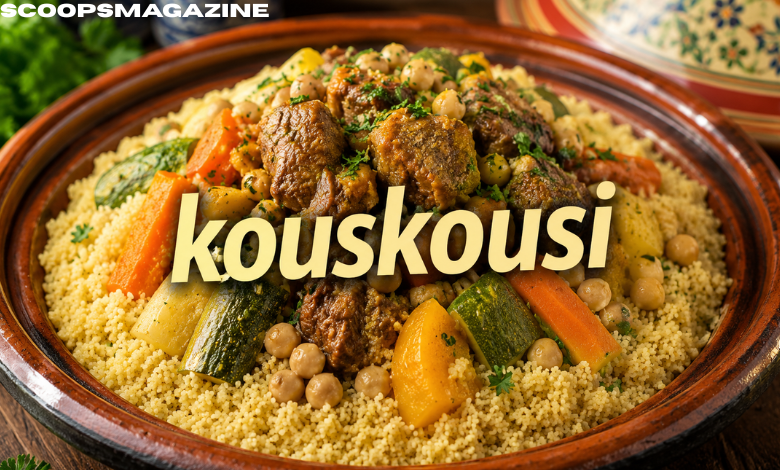
Kouskousi is a traditional food made from semolina, a coarse flour obtained from durum wheat. Although many people mistake it for a grain, kouskousi is actually a type of pasta because it is produced by combining semolina with water before being rolled into small granules and dried. Its small size, quick cooking time, and ability to absorb flavors have made it an important part of many traditional meals. For centuries, kouskousi has remained a staple in North African households. It is commonly served with vegetables, meat, seafood, or legumes and can also be prepared as a sweet dish with dried fruits and spices. Today, it is available in supermarkets around the world and is valued for being simple to cook and easy to include in different recipes.
What is kouskousi?
Kouskousi is made by moistening semolina with water and rolling it into tiny round pieces before drying them. Traditional preparation involved hand-rolling the granules through repeated mixing and sifting, while modern production uses machines to create consistent sizes.
Although it resembles grains such as millet or rice, kouskousi belongs to the pasta family because its main ingredient is durum wheat semolina. After drying, it can be stored for long periods and cooked within a few minutes by steaming or soaking in hot liquid.
The origin of kouskousi
The history of kouskousi stretches back many centuries across North Africa. Historical records and archaeological findings suggest that similar foods were prepared long before modern kitchens existed. Communities developed practical ways to preserve wheat harvests by transforming semolina into small dried pellets that could be stored for months.
The dish gradually became associated with family gatherings, celebrations, religious festivals, and everyday meals. Even after spreading to Europe, the Middle East, and other parts of the world, it continued to reflect its North African heritage.
Why kouskousi became an important food
Several practical reasons explain why kouskousi remained popular for generations.
It requires only a few basic ingredients, stores well without refrigeration, cooks quickly, and pairs with many different foods. Families could prepare large portions without needing expensive ingredients, making it suitable for both daily meals and special occasions.
Its flexibility also helped it spread beyond its region of origin because people could adapt recipes according to local ingredients.
Traditional preparation methods
Before factory production became common, making kouskousi was a time-consuming household activity.
Semolina was sprinkled with water while being gently rolled by hand until small granules formed. More dry semolina was gradually added to prevent sticking and to increase the size of the particles. The finished granules were sifted, dried, and stored until needed.
Cooking traditionally involved steaming the kouskousi several times over simmering stew. This method allowed the grains to remain light while absorbing the aroma from vegetables, herbs, and spices below.
Modern production of kouskousi
Commercial manufacturing has simplified the process while maintaining the basic principle of combining semolina and water.
Factories mix the ingredients under controlled conditions before shaping uniform granules. The product is then dried carefully to improve shelf life and packaged for distribution.
Many varieties sold today are partially pre-cooked during manufacturing, allowing consumers to prepare meals within minutes by adding boiling water or broth.
Types of kouskousi
Not every variety has the same texture or size. Different regions prefer different forms depending on local recipes.
Moroccan style
This is the smallest and most widely available type. It cooks very quickly and is commonly used in vegetable, meat, or chicken dishes.
Algerian style
Algerian varieties are often slightly larger and are frequently paired with rich meat stews containing seasonal vegetables.
Tunisian style
Tunisian recipes commonly include seafood, spicy sauces, and regional seasonings that create a stronger flavor profile.
Lebanese couscous
Although sometimes grouped with kouskousi, Lebanese couscous consists of much larger pasta pearls with a firmer texture and longer cooking time.
Whole wheat varieties
Whole wheat versions retain more of the wheat kernel, resulting in additional fiber and a slightly nuttier taste.
Ingredients commonly served with kouskousi
One reason for its popularity is its ability to work with many ingredients.
Common additions include:
- Chicken
- Lamb
- Beef
- Fish
- Shrimp
- Chickpeas
- Lentils
- Carrots
- Zucchini
- Pumpkin
- Tomatoes
- Onions
- Bell peppers
- Spinach
- Raisins
- Almonds
- Fresh herbs
The final dish depends largely on regional traditions and personal preferences.
How to cook kouskousi
Preparing standard instant kouskousi is straightforward.
Start by boiling water or broth. Place the dry kouskousi into a bowl and pour the hot liquid over it using roughly equal amounts of liquid and couscous. Cover the bowl for several minutes until the liquid is absorbed.
After resting, separate the granules gently with a fork before serving. A small amount of olive oil or butter can help keep the texture light.
Traditional versions intended for steaming require more cooking time and several rounds of steaming.
Common cooking mistakes
Although easy to prepare, several mistakes can affect the final texture.
Adding excessive water often produces a soft, sticky result.
Using too little liquid leaves the granules dry and undercooked.
Skipping the resting period prevents proper hydration.
Stirring aggressively while cooking can cause clumping.
Fluffing gently with a fork after cooking usually produces better texture than pressing with a spoon.
Nutritional value of kouskousi
Kouskousi mainly provides carbohydrates that supply energy for daily activities.
It also contains:
- Moderate protein
- Small amounts of fiber
- Iron
- Selenium
- B vitamins
The exact nutritional profile varies depending on whether refined or whole wheat semolina is used.
Since it is relatively low in fat, many people combine it with vegetables, lean proteins, and healthy oils to create balanced meals.
Is kouskousi healthy?
Kouskousi can be part of a balanced eating pattern when served with nutritious ingredients.
Vegetables increase fiber and vitamins.
Beans and legumes contribute plant protein.
Chicken and fish provide lean protein.
Healthy fats from olive oil or nuts improve both flavor and nutritional balance.
Like most wheat products, portion size and accompanying ingredients influence the overall nutritional value.
Is kouskousi gluten free?
Traditional kouskousi is not gluten free because it is made from durum wheat semolina.
People with celiac disease or gluten sensitivity should avoid conventional versions unless they choose specially manufactured gluten-free alternatives made from ingredients such as corn or rice.
Reading product labels is important because ingredients vary between brands.
Popular dishes made with kouskousi
Many traditional recipes center around this ingredient.
Vegetable kouskousi combines steamed vegetables with flavorful broth.
Chicken versions include slow-cooked poultry with onions and herbs.
Lamb recipes often feature root vegetables and aromatic spices.
Seafood variations are common in coastal regions where fresh fish and shellfish are readily available.
Some families also prepare sweet versions containing raisins, cinnamon, dates, honey, or nuts.
Kouskousi in North African culture
Food often reflects local customs, and kouskousi is closely connected with family traditions throughout North Africa.
Large serving dishes encourage people to gather around the table and share meals together. Many celebrations include carefully prepared couscous dishes because they can feed large groups while bringing together a variety of ingredients.
In some communities, Friday meals regularly feature kouskousi served after family prayers.
How kouskousi spread around the world
Trade, migration, and cultural exchange introduced kouskousi to many countries.
North African communities carried traditional recipes to Europe, where restaurants and home cooks gradually adopted the dish. International supermarkets later expanded its availability, making packaged couscous accessible in many regions.
Cooking shows, recipe websites, and travel also contributed to its growing popularity.
Kouskousi compared with rice
Although both are used as side dishes, they differ in several ways.
Rice is a cereal grain harvested directly from rice plants.
Kouskousi is produced from processed wheat semolina.
Rice usually requires boiling for a longer period, while instant kouskousi cooks much faster.
Both absorb flavors well, but couscous generally has a lighter texture.
Kouskousi compared with pasta
Since kouskousi belongs to the pasta family, it shares similarities with noodles and macaroni.
Both are made from durum wheat.
The main difference lies in shape and cooking style.
Pasta is formed into larger shapes that require boiling, whereas kouskousi consists of tiny granules that are often steamed or hydrated with hot liquid.
Storing kouskousi
Dry kouskousi should be stored in an airtight container in a cool, dry place.
Proper storage protects it from moisture and insects while preserving quality for many months.
After cooking, leftovers should be refrigerated in a sealed container and consumed within a few days. Reheating with a small amount of water or broth helps restore moisture.
Can kouskousi be used in different recipes?
Its mild taste allows it to fit into many styles of cooking.
It works well in salads mixed with fresh vegetables and herbs.
It can replace rice alongside grilled meat or fish.
Some people use it as stuffing for vegetables, while others mix it into soups for additional texture.
Breakfast versions prepared with milk, dried fruits, and nuts are also enjoyed in some households.
Buying good quality kouskousi
When purchasing packaged kouskousi, check the ingredient list and product condition.
The granules should appear dry and evenly sized.
Packaging should be sealed without moisture inside.
Whole wheat versions are available for those seeking higher fiber content.
Consumers can also choose between instant products and traditional steaming varieties depending on their preferred cooking method.
Interesting facts about kouskousi
Several facts make this food unique.
- It is considered pasta rather than a grain.
- Durum wheat is its traditional ingredient.
- It has been prepared in North Africa for centuries.
- Instant versions usually cook within minutes.
- It can be served in savory or sweet recipes.
- Different countries have developed their own cooking styles.
- Traditional preparation often involves steaming instead of boiling.
- It is commonly paired with vegetables, legumes, meat, and seafood.
Conclusion
Kouskousi is a simple yet versatile food with a long history rooted in North African cooking traditions. Made from durum wheat semolina, it offers quick preparation, long storage life, and compatibility with a wide range of ingredients. Whether served with vegetables, meat, seafood, or prepared as a sweet dish, it remains a practical choice for everyday meals and family gatherings. Its continued popularity comes from its straightforward preparation, adaptable nature, and ability to fit into many different recipes without losing its traditional identity. As more people discover North African cuisine, kouskousi continues to be appreciated not only for its history but also for its convenience and flexibility in the kitchen.