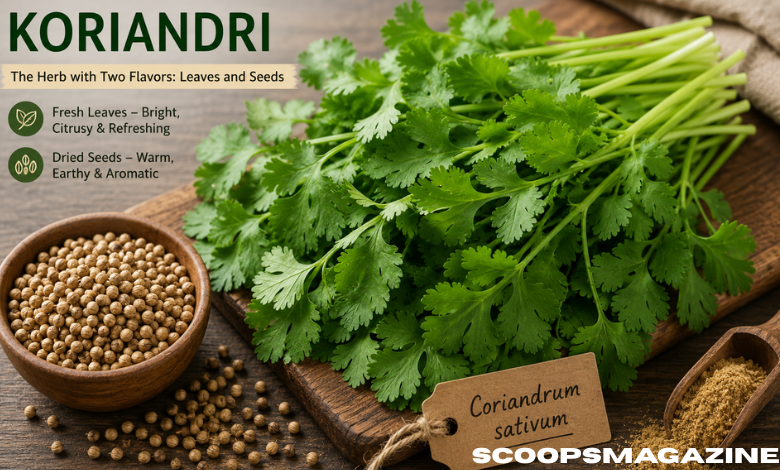
Koriandri is a useful herb known for providing two distinct ingredients from the same plant: fresh green leaves and dried seeds. It is used in household cooking, commercial food preparation, traditional recipes, and spice mixtures across many regions. Its leaves are valued for their fresh aroma, while the mature seeds have a warmer and milder taste. Because these parts serve different purposes, koriandri has earned a permanent place in many food cultures. The plant is relatively easy to recognize and grow, and its long history shows how generations have used it according to local cooking methods and available ingredients.
What Is Koriandri?
Koriandri is an annual plant scientifically called Coriandrum sativum. It belongs to the Apiaceae family, which includes several familiar plants such as parsley, celery, fennel, and carrots. The plant produces green leaves during its early growth stage, followed by thin stems, small flowers, and round seeds. Depending on the region, its fresh leaves may be called cilantro or coriander leaves, while its dried fruits are commonly known as coriander seeds. The entire growth cycle takes place within one season, making koriandri a practical herb for both home gardeners and agricultural production.
Physical Appearance of the Koriandri Plant
The appearance of koriandri changes as the plant develops. Young plants usually have broader green leaves growing close to the soil, while mature plants produce finer and more divided leaves along taller stems. Small white or pale pink flowers appear later and grow together in loose clusters. Once flowering is complete, round green fruits begin to form and gradually become brown as they dry. These dried fruits are harvested as coriander seeds. The changing structure of the plant allows growers to decide whether they want to collect fresh leaves during early growth or wait longer to obtain seeds.
Historical Background of Koriandri
Koriandri has been connected with human food traditions for thousands of years. Early communities valued herbs that could be consumed fresh and preserved for later use, and coriander met both needs. Its seeds could be dried, transported, and stored for long periods, which helped the plant spread between different regions. As people traveled and traded goods, coriander became established in new food cultures. Over generations, communities developed their own methods for preparing the leaves and seeds, turning the plant into an ingredient with many regional identities rather than a herb connected with only one cuisine.
How Koriandri Spread Across Different Regions
The movement of traders, travelers, farmers, and migrating communities helped koriandri reach different parts of the world. Its seeds were convenient to carry because they were small, dry, and suitable for storage. Once planted in suitable conditions, the herb could be grown for fresh leaves or allowed to mature for seed production. As koriandri entered new regions, cooks combined it with local foods and seasonings. This gradual process explains why the plant is now found in South Asian curries, Latin American sauces, Middle Eastern recipes, European spice preparations, and many other traditional foods.
Fresh Koriandri Leaves
Fresh koriandri leaves are known for their noticeable smell and distinct flavor. They are usually green, soft, and delicate, making them suitable for garnishing and adding freshness to prepared dishes. The leaves are commonly chopped and sprinkled over food shortly before serving, although they can also be blended into sauces, chutneys, and marinades. Unlike dried seeds, fresh leaves may lose some of their character when cooked for extended periods. For this reason, many cooks add them near the end of preparation when they want the fresh aroma to remain noticeable in the finished meal.
Koriandri Seeds
The seeds of koriandri develop after the plant completes its flowering stage. Initially green, they become light brown as they mature and dry. Their flavor is significantly different from that of the fresh leaves, offering a milder and warmer taste. The seeds can be used whole, lightly crushed, roasted, or ground into powder. Whole seeds are often included in pickles and slow-cooked foods, while ground coriander is commonly mixed with other spices. Because dried seeds can be stored much longer than fresh leaves, they are a practical ingredient for regular household cooking.
Difference Between Koriandri Leaves and Seeds
Although koriandri leaves and seeds come from the same plant, they should not be considered direct substitutes for each other. Fresh leaves provide a green and sharp aroma that works well in salads, sauces, and finished dishes. Seeds have a deeper and more balanced flavor suitable for spice mixtures and foods requiring longer cooking. Their different characteristics come from changes that occur as the plant grows and the seeds mature. Understanding this difference is useful because replacing one form with another can completely alter the taste and overall character of a recipe.
Flavor and Aroma of Koriandri
The flavor of koriandri depends heavily on which part of the plant is being used. Fresh leaves have a strong aroma that can immediately change the character of food, while dried seeds provide a softer taste that develops gradually during cooking. Roasting the seeds can make their aroma more noticeable before they are crushed or ground. These differences make koriandri suitable for several preparation methods. A cook can use fresh leaves for a final touch, whole seeds for slow flavor development, or ground coriander when an even distribution of seasoning is needed throughout a dish.
Koriandri in South Asian Cuisine
South Asian cooking makes extensive use of both fresh koriandri leaves and dried seeds. Chopped leaves are frequently added to curries, lentils, rice dishes, vegetable preparations, snacks, and chutneys. Ground coriander is commonly included in spice mixtures and combined with ingredients such as cumin, turmeric, and chili. The plant works well with many everyday foods, which is one reason it remains common in household kitchens. Fresh leaves may provide the finishing flavor, while ground seeds are often added earlier during cooking to become part of the main seasoning base.
Koriandri in Middle Eastern Cooking
Koriandri has also developed an established role in Middle Eastern food traditions. Depending on the local cuisine, cooks may use fresh leaves, dried seeds, or ground coriander. The herb can be combined with vegetables, meat, legumes, garlic, and other seasonings. Coriander seeds are also included in certain regional spice mixtures where they help balance stronger ingredients. The plant’s long connection with trade and agriculture in this part of the world has allowed it to become part of traditional recipes that continue to be prepared in homes and restaurants.
Koriandri in Latin American Food
Fresh koriandri leaves, commonly called cilantro in many Latin American regions, are widely used in sauces, soups, beans, rice, tacos, and fresh preparations. They are often combined with tomatoes, onions, peppers, and citrus juice to create flavorful accompaniments for different meals. Because the fresh aroma can become weaker during extended cooking, leaves are frequently added shortly before food is served. This approach shows how one plant can be used differently depending on regional traditions, available ingredients, and the cooking methods developed by local communities.
Nutritional Profile of Koriandri
Koriandri leaves contain water, fiber, and naturally occurring nutrients found in many green herbs. The dried seeds have a different composition because moisture is removed during the drying process. Both forms also contain various plant compounds that have attracted scientific interest. However, koriandri is normally consumed in moderate quantities as a herb or spice rather than as a main food source. Its nutritional contribution is best understood as one part of a varied diet, while its primary purpose in everyday cooking remains adding flavor, aroma, and variety to meals.
Traditional Uses of Koriandri
Beyond its culinary role, koriandri has appeared in traditional practices across different cultures. Leaves, seeds, and preparations made from the plant have been used in various ways according to regional knowledge and customs. Such historical use demonstrates the importance people placed on accessible plants that could serve multiple purposes. However, traditional practices should not automatically be treated as confirmed medical treatments. Modern scientific research uses specific testing methods to evaluate plant compounds, while historical traditions mainly provide information about how earlier communities understood and used koriandri in everyday life.
Why Some People Dislike Koriandri
Fresh koriandri produces very different reactions among people. While many enjoy its strong and refreshing character, others describe the taste as unpleasant or similar to soap. Differences in how individuals perceive smell and flavor may contribute to these contrasting opinions. Since aroma plays an important role in taste, the same leaves can create noticeably different experiences for different people. This explains why fresh koriandri is sometimes served separately, allowing each person to decide how much they want to add rather than including a large quantity directly in the entire dish.
Growing Koriandri at Home
Koriandri can be grown in gardens, small planting areas, and suitable containers. Seeds are usually placed directly into well-drained soil and watered regularly without keeping the ground constantly soaked. Once seedlings appear, the plants need enough space and suitable conditions to continue developing. Leaves can be harvested during the growing period, while plants intended for seed production must be allowed to flower and mature. Because very warm conditions can encourage early flowering, gardeners often plant coriander in separate batches to maintain a more regular supply of fresh leaves.
Harvesting Fresh Koriandri
Fresh leaves can be collected once the plant has developed enough healthy growth. Instead of removing the entire plant immediately, gardeners may cut selected outer stems and allow the remaining parts to continue growing. Harvesting should be done carefully because the soft leaves and stems can become damaged easily. Once collected, the herb should be used or stored properly because fresh coriander does not remain in good condition indefinitely. Regular harvesting can provide a useful supply for home cooking when plants are grown under suitable conditions and managed carefully.
Collecting Koriandri Seeds
Producing koriandri seeds requires allowing the plant to move beyond its leafy stage and develop flowers. After flowering, small green fruits form and gradually dry on the plant. When they become brown and firm, the seed heads can be collected and placed in a dry location. Once fully dried, the seeds are separated from the remaining plant material and stored in airtight containers. Home-grown seeds can be kept for cooking or saved for future planting, making koriandri a useful plant for gardeners interested in maintaining their own supply.
Proper Storage of Fresh Koriandri
Fresh koriandri requires careful storage because the leaves can quickly wilt or spoil. Too much moisture may encourage decay, while very dry conditions can cause the herb to lose freshness. Some people keep the stems in a small amount of water inside the refrigerator, while others wrap the leaves and place them in suitable containers. Whatever method is chosen, damaged leaves should be removed and the herb should be checked regularly. Proper storage helps reduce waste and allows fresh koriandri to remain available for several meals instead of being discarded soon after purchase.
Storing Koriandri Seeds and Powder
Dried koriandri seeds should be stored away from direct sunlight, moisture, and excessive heat. Airtight containers are useful because exposure to air can gradually reduce the aroma of spices. Whole seeds generally maintain their quality longer than ground coriander, which is why some cooks prefer grinding small quantities when needed. Coriander powder is convenient but should also be kept in a properly sealed container. Regularly checking the aroma can help determine whether stored seeds or powder still have enough flavor to contribute effectively to cooking.
Common Cooking Methods
There are several ways to prepare koriandri depending on the desired result. Fresh leaves can be chopped for garnishing, blended into sauces, or mixed into uncooked preparations. The stems can also be finely chopped and used because they contain noticeable flavor. Seeds may be added whole to recipes, lightly crushed, or roasted before grinding. Each technique produces a different result, so choosing the correct method depends on the dish. Learning how the plant responds to chopping, heating, roasting, and grinding helps cooks use it more effectively.
Koriandri in Spice Mixtures
Ground koriandri is an important ingredient in many spice blends because its balanced flavor combines easily with other seasonings. It is often paired with cumin, chili, turmeric, pepper, and several additional spices depending on regional cooking traditions. In some mixtures, coriander forms a major part of the recipe, while in others it plays a smaller supporting role. Its ability to work alongside stronger ingredients makes it useful for creating seasoning blends that can be added to meat, vegetables, lentils, sauces, and other cooked foods.
Common Mistakes When Using Koriandri
A frequent mistake is treating fresh leaves and dried seeds as interchangeable ingredients. Another problem occurs when fresh leaves are cooked for too long even though a strong fresh aroma is desired. Poor storage can also cause leaves to spoil quickly or dried spices to lose their flavor. Using excessive amounts may overpower other ingredients, particularly when serving people who are sensitive to the taste of fresh coriander. Understanding the purpose of each form and adding it at the correct stage of cooking can help prevent these common problems.
Buying Good-Quality Koriandri
When purchasing fresh koriandri, it is useful to choose bunches with green leaves and firm stems rather than heavily wilted or yellowing plants. Freshness matters because damaged leaves may deteriorate quickly after purchase. Whole seeds should appear clean and produce a recognizable aroma when gently crushed. Ground coriander should also have a noticeable smell when the container is opened. Buying reasonable quantities based on regular use can prevent long storage periods and help ensure that both fresh and dried forms retain better quality.
Cultural Importance of Koriandri
Koriandri has become part of many food traditions because generations of cooks have adapted the plant to local ingredients and preparation methods. It may appear as a fresh garnish in one region, a major component of spice blends in another, or an ingredient in sauces and marinades elsewhere. This broad use demonstrates how agricultural products can move between cultures and develop different identities over time. Despite variations in preparation, the plant continues to connect historical cooking practices with modern household meals and commercial food production.
Why Koriandri Remains Popular
The continued popularity of koriandri comes from its flexibility and practical value. A single plant provides leaves, stems, roots in some cuisines, and seeds that can all be used differently. Fresh parts bring immediate aroma to meals, while dried seeds offer longer storage and different cooking possibilities. The herb can be grown on a small scale or produced commercially, making it accessible to many consumers. Its compatibility with vegetables, meat, rice, lentils, soups, and sauces has helped maintain its position as a regular kitchen ingredient.
Conclusion
Koriandri is a useful herb with a long history and several distinct culinary applications. Scientifically known as Coriandrum sativum, the plant provides fresh leaves and dried seeds that differ significantly in flavor and preparation. Its journey through different regions has resulted in a wide range of cooking traditions, from fresh sauces and garnishes to curries and spice mixtures. Proper growing, harvesting, storage, and preparation methods can help people make better use of the plant. The continued presence of koriandri in kitchens around the world reflects its versatility, accessibility, and ability to serve different purposes within everyday cooking.