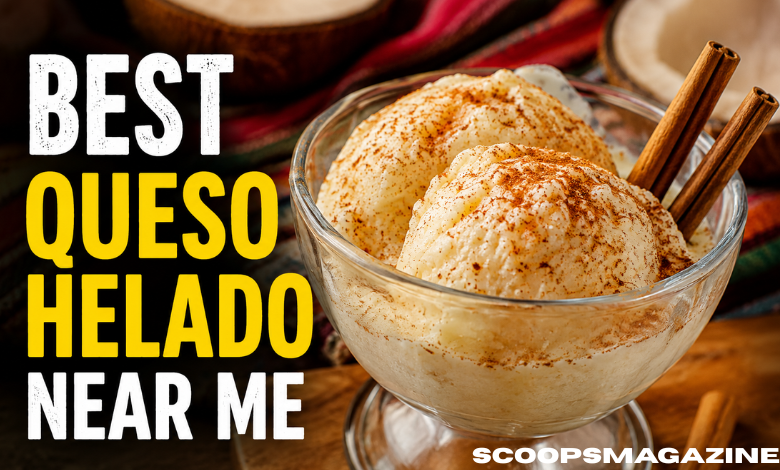
Searching for the best queso helado near me usually begins with curiosity about a dessert that looks familiar but tastes different from standard ice cream. Queso helado is closely connected with Peruvian food culture, particularly the city of Arequipa. Despite the word “queso,” which means cheese in Spanish, traditional queso helado is not made from cheese. The name is generally associated with its appearance and traditional preparation rather than its ingredients. The dessert is commonly prepared with milk, cinnamon, coconut, vanilla, and sugar. Recipes vary between families, restaurants, and regions, but the basic goal remains similar: creating a smooth frozen dessert with a clear dairy flavor and noticeable spices. For someone trying queso helado for the first time, understanding its ingredients, texture, and preparation can make it easier to recognize a well-made serving.
Finding good queso helado can require more effort than finding common desserts such as chocolate ice cream or frozen yogurt. It is often available at Peruvian restaurants, Latin American bakeries, cultural festivals, and specialty dessert shops. Knowing where to search and what qualities to look for can help customers find a version that reflects the traditional character of this Peruvian specialty.
What Is Queso Helado?
Queso helado is a frozen milk-based dessert associated with Arequipa in southern Peru. Its name can be confusing because a direct translation may suggest “frozen cheese.” However, cheese is generally not part of the traditional recipe. The dessert is usually made by combining milk with ingredients such as cinnamon, coconut, vanilla, cloves, and sugar. The mixture is heated so the flavors can blend before being cooled and frozen. Traditional preparation methods may involve freezing the mixture in a metal container while continuously stirring or scraping it to create the desired consistency.
Unlike many commercial ice creams, queso helado is not necessarily defined by a high-fat base or large amount of cream. Its character comes from the combination of milk, spices, coconut, and preparation technique. A good serving should allow each major ingredient to contribute without one flavor completely dominating the others.
The Origins of Queso Helado
The history of queso helado is strongly connected with Arequipa, one of Peru’s major culinary centers. The city has developed a food culture influenced by local ingredients, regional customs, and techniques introduced during the colonial period. Dairy production became increasingly important in the region, and milk was used to create different foods and desserts. Over time, local cooks developed frozen preparations that combined dairy with ingredients such as cinnamon and coconut.
Queso helado eventually became a recognizable part of Arequipa’s food identity. It could be prepared at home, sold by street vendors, or served during gatherings and celebrations. Traditional recipes were often passed between generations, which explains why preparation methods can differ from one family to another. The dessert remains associated with its regional roots even as it becomes available in restaurants and communities outside Peru.
Why Is It Called Queso Helado If It Contains No Cheese?
The name is one of the first things that causes confusion among people unfamiliar with the dessert. Several explanations are commonly connected with the term. One explanation relates to appearance. Traditionally prepared queso helado can have a pale color and firm texture that resembles a block or slice of cheese. The way the frozen mixture was scraped or served may also have contributed to the name.
Regardless of the exact historical reason, customers should not expect a savory cheese flavor. Traditional queso helado is a sweet dessert centered on milk and aromatic ingredients. This distinction is useful when searching for the best queso helado near me because online descriptions and translated menus may not always clearly explain what the dish contains.
What Does Queso Helado Taste Like?
Queso helado has a milk-forward taste supported by cinnamon, coconut, vanilla, and other spices. The exact flavor depends on the recipe and preparation method. Cinnamon is often one of the most recognizable ingredients. However, a balanced recipe should not taste like a spoonful of cinnamon powder. The spice should work with the milk and sweetness to create a warm background flavor.
Coconut may add mild richness and texture. Vanilla can provide additional depth, while cloves or other spices may appear in certain recipes. The sweetness level is another important feature. A carefully prepared queso helado should be sweet enough to work as a dessert without allowing sugar to hide the other ingredients. People who enjoy rice pudding, cinnamon-flavored desserts, coconut sweets, or milk-based frozen treats may find some familiar characteristics in queso helado.
How Queso Helado Differs From Regular Ice Cream
Although queso helado and ice cream are both frozen desserts, they are not identical products. Regular ice cream is commonly made with milk, cream, sugar, and flavorings. Commercial versions may also contain stabilizers and emulsifiers. Queso helado follows a different culinary tradition. The use of cinnamon, coconut, and other aromatic ingredients gives it a recognizable flavor. Preparation techniques can also produce a texture that differs from heavily churned commercial ice cream.
Some queso helado recipes have a slightly lighter consistency, while others are dense and creamy. The differences depend on the amount of dairy, sugar, coconut, and the freezing method used. Customers should judge queso helado according to its own characteristics rather than expecting it to taste exactly like vanilla or coconut ice cream.
What Makes a Good Queso Helado?
Several factors can help distinguish a carefully prepared queso helado from an average frozen dessert. Ingredient quality is one of the most important considerations. Fresh milk and properly handled dairy products provide the base. Real spices and well-prepared coconut can contribute more natural flavor than excessive artificial extracts.
Balance is equally important. Too much sugar can overwhelm the milk and spices. Excessive cinnamon may create bitterness, while too much coconut can change the texture and hide the other flavors. Texture also matters. Queso helado should be pleasant to eat without feeling excessively icy or watery. Some variation is expected because traditional recipes and modern restaurant versions use different preparation methods. Finally, freshness can affect the overall experience. A dessert that has been stored incorrectly or kept frozen for too long may develop unwanted ice crystals and lose part of its intended texture.
Where Can I Find the Best Queso Helado Near Me?
Peruvian restaurants are usually the first places worth checking. Restaurants that specialize in traditional regional dishes may offer queso helado as a regular dessert or occasional menu item. Latin American bakeries and dessert shops can also be useful options. Some businesses prepare Peruvian sweets even if they do not operate as full-service restaurants.
Food festivals are another possibility. Peruvian cultural celebrations and Latin American community events sometimes feature regional foods that are difficult to find on standard restaurant menus. Customers can also check local food delivery services and online restaurant directories. Searching for terms such as “Peruvian dessert,” “Arequipa food,” or “queso helado” may produce better results than searching only for nearby ice cream shops. Because availability can change, contacting the restaurant before visiting may save time.
How to Search More Effectively
A general search for frozen desserts may return hundreds of businesses without showing any that actually serve queso helado. Using specific search terms can improve the results. Try including the name of your city or neighborhood with the dessert name. Searching for Peruvian restaurants nearby may also identify businesses whose menus are not fully indexed by search engines.
Restaurant websites and social media pages can provide additional information. Some small food businesses announce limited desserts through social media rather than updating their permanent menus. Customer photos can also be useful. Images may show whether the restaurant actually serves queso helado and how the dessert is presented. However, online information should be checked carefully. An old menu photo or review does not guarantee that the item is still available.
Check the Menu Before Visiting
Finding a Peruvian restaurant does not automatically mean queso helado will be available. Peru has a large and diverse food culture, and restaurant menus vary significantly. Some businesses focus on seafood, grilled meats, sandwiches, or other regional specialties. Desserts may be limited to more widely recognized options.
Before traveling to a restaurant specifically for queso helado, check the current menu or contact the business directly. Ask whether the dessert is available that day and whether it is made in-house. This simple step is particularly useful for restaurants that prepare queso helado only on weekends, during special events, or in warmer months.
Why Preparation Method Matters
The way queso helado is prepared affects both flavor and texture. Traditional methods require patience because the milk mixture must first absorb the flavors of the spices and other ingredients. The mixture is heated and then cooled before the freezing process begins. During freezing, stirring or scraping helps control the formation of ice crystals.
If the process is rushed, the texture may become uneven. If the ingredients are not properly infused, the finished dessert may taste flat. Modern equipment can simplify production, but good results still depend on correct ingredient proportions and careful handling. A machine cannot compensate for poor-quality milk, excessive sugar, or unbalanced spices.
Traditional Versus Modern Queso Helado
Customers may encounter both traditional and modern interpretations of queso helado. Traditional recipes usually remain focused on milk, coconut, cinnamon, vanilla, and related ingredients. The presentation may be simple, with cinnamon sprinkled over the top. Modern versions may include additional flavors, toppings, sauces, or creative presentations. Restaurants may adjust the recipe to suit local preferences or available ingredients. Innovation is not necessarily a problem. A modern variation can still be enjoyable. However, customers searching specifically for an authentic experience may prefer a restaurant that explains its recipe, regional influence, or preparation method. The best choice depends on whether the customer wants a traditional Arequipa-style dessert or a contemporary interpretation.
Signs of a Well-Made Serving
A good serving of queso helado should have a clean appearance and an inviting dairy aroma. Cinnamon may be visible on top or noticeable in the flavor. The texture should be consistent with the preparation style. Traditional versions may differ from smooth commercial ice cream, but the dessert should not be dominated by large, unpleasant ice crystals.
The sweetness should remain controlled. Customers should still be able to identify milk, coconut, and spices after the first few bites. A well-made serving should also leave a balanced aftertaste. Excessive artificial flavoring, overwhelming sugar, or poor freezer storage can reduce the quality of the experience.
Reading Customer Reviews Carefully
Online reviews can help when searching for the best queso helado near me, but they should be used with some judgment. Look for reviews that specifically mention the dessert. A restaurant may have a high overall rating because of its main dishes while receiving little feedback about queso helado. Detailed reviews are often more useful than simple star ratings. Comments about freshness, texture, sweetness, portion size, and authenticity can provide practical information. Recent reviews should generally receive more attention because restaurant menus, staff, recipes, and business conditions can change. Photos posted by customers may also help confirm whether the dessert matches what you are looking for.
Questions to Ask Before Ordering
Customers who are interested in the preparation can ask a few simple questions. Is the queso helado made at the restaurant? Does the recipe use coconut and cinnamon? Is it prepared regularly or only on certain days? Is the version based on an Arequipa-style recipe?
These questions do not need to turn into a detailed interview. The purpose is simply to understand what is being served. Restaurant staff who are familiar with the dessert may also explain ingredients that customers need to know about because of allergies or dietary restrictions.
How Queso Helado Is Usually Served
Presentation varies between vendors and restaurants. The dessert may be served in a bowl, cup, glass, or cone. A traditional presentation is often simple. The queso helado may be topped with ground cinnamon without additional sauces or decorations.
Some modern restaurants add fruit, cookies, coconut flakes, syrups, or other toppings. These additions can change the eating experience, so first-time customers may prefer to try the basic version before ordering a heavily modified serving. Portion sizes also vary. Because the dessert has a noticeable milk and spice flavor, even a moderate portion can provide a complete introduction.
Can Queso Helado Be Made at Home?
People who cannot find the dessert locally may decide to prepare it at home. Homemade recipes generally begin by heating milk with cinnamon and other ingredients. The mixture is strained, cooled, and frozen. Regular stirring during freezing can help improve the consistency when an ice cream machine is not available.
The main challenge is achieving the right balance of flavor and texture. Adding more sugar does not necessarily create a better dessert. Similarly, using too much cinnamon or coconut can overwhelm the milk base. Home preparation can also help people understand why different restaurants serve noticeably different versions. Small changes in ingredients and freezing techniques can produce significant differences in the final result.
Queso Helado and Peruvian Food Culture
Queso helado is more than another item on a dessert menu. Its importance comes partly from its connection with Arequipa and the culinary traditions of the region. Regional dishes often tell a story about local ingredients, historical influences, and family practices. Queso helado reflects this process through its use of dairy, spices, and preparation methods developed over generations.
For customers outside Peru, ordering the dessert can provide an introduction to a part of Peruvian cuisine that receives less international attention than dishes such as ceviche. Trying regional desserts can also encourage customers to explore a restaurant’s broader menu and learn more about the food traditions represented by the business.
Common Mistakes When Choosing Queso Helado
One common mistake is assuming every frozen dessert with cinnamon is authentic queso helado. Similar ingredients can appear in many sweets, but the recipe and preparation method matter. Another mistake is choosing a restaurant only because it has the highest overall rating. A highly rated restaurant may not specialize in traditional desserts.
Customers may also rely on old menus without confirming current availability. This can lead to unnecessary travel and disappointment. Finally, expecting queso helado to taste exactly like conventional ice cream can affect the experience. It should be approached as a separate dessert with its own history, ingredients, and texture.
Is Queso Helado Worth Trying?
For people interested in Peruvian cuisine or milk-based desserts, queso helado is worth considering. Its combination of dairy, coconut, cinnamon, and sweetness offers an alternative to standard ice cream flavors. The dessert may be especially appealing to people who prefer recognizable ingredients and moderate spice notes. It can also be an accessible introduction to Peruvian regional food for someone unfamiliar with the country’s cuisine.
Quality will vary between restaurants and vendors, which is why research and menu checking can be useful before ordering.
Final Thoughts
Searching for the best queso helado near me is about more than locating the closest place that sells a frozen dessert. A good experience depends on finding a restaurant, bakery, vendor, or food event that understands the ingredients and preparation behind this Arequipa specialty. Start by checking Peruvian restaurants and Latin American dessert businesses in your area. Review current menus, read recent customer comments, look at photos, and confirm availability before making a special trip.
When you finally try queso helado, pay attention to the balance of milk, cinnamon, coconut, vanilla, and sweetness. The texture may differ from ordinary commercial ice cream, and that difference is part of the dessert’s identity. A carefully prepared serving provides a straightforward way to experience one of Peru’s recognized regional sweets. Whether purchased from a traditional restaurant, discovered at a cultural festival, or prepared at home, queso helado offers a clear example of how simple ingredients and established cooking methods can create a dessert with a strong connection to place and culinary history.