Masgonzola is a cheese blend that combines two well-known Italian cheeses into a single product. It brings together the smooth texture of mascarpone with the distinctive taste of Gorgonzola, creating a balanced flavor that is easier to enjoy than traditional blue cheese for many people. Unlike aged cheeses that rely on strong aromas and firm textures, Masgonzola focuses on creaminess. The mascarpone softens the intensity of Gorgonzola, making the cheese rich without becoming overpowering. This balance has helped it become popular among people who enjoy cheese boards, cooking, and simple spreads. Although it is not as widely known as mozzarella, parmesan, or ricotta, Masgonzola has earned a place in many kitchens because of its versatility. It can be spread on bread, melted into pasta, paired with fruit, or used as an ingredient in sauces.
This guide explains what Masgonzola is, how it is made, how it tastes, where it comes from, how to use it, and why many people consider it a good introduction to blue cheese.
What Is Masgonzola?
Masgonzola is a creamy cheese created by blending mascarpone with Gorgonzola. Rather than producing a completely new cheese through aging, manufacturers combine two finished cheeses to achieve a different texture and flavor profile. Mascarpone contributes richness, mild dairy flavor, and a smooth consistency. Gorgonzola provides the familiar blue veins, slight saltiness, and tangy character associated with blue cheese. The final product delivers both qualities without allowing either one to dominate. Instead of experiencing the sharp taste of pure Gorgonzola immediately, the creamy mascarpone creates a softer first impression before the blue cheese flavor gradually develops. Depending on the producer, the proportions of each cheese may differ. Some versions contain more mascarpone for extra creaminess, while others increase the Gorgonzola content to create a stronger taste.
The Origins Behind Masgonzola
To understand Masgonzola, it helps to know the history of its two main ingredients. Mascarpone originated in northern Italy and has long been known for its smooth texture. It is made from cream rather than whole milk and has become famous as the main ingredient in desserts such as tiramisu. Gorgonzola is one of Italy’s oldest blue cheeses. It has been produced for centuries and develops its characteristic blue-green veins during aging. Depending on its style, it can be creamy or firm, with flavors ranging from mild to quite strong. Masgonzola likely developed as chefs and cheese makers experimented with combining the richness of mascarpone with the bold taste of Gorgonzola. Instead of changing the traditional production methods of either cheese, they blended them after production to create a more approachable option. Today, several cheese producers sell similar products under different names, including “Gorgonzola with mascarpone” or “Mascarpone and Gorgonzola.”
How Masgonzola Is Made
The production process begins with separately prepared mascarpone and Gorgonzola. Mascarpone is made by heating cream and adding an acid that thickens it into a smooth, rich cheese. It contains very little aging and remains fresh. Gorgonzola follows a much longer process. It is made from cow’s milk and aged while specific molds create the characteristic blue veins throughout the cheese. Once both cheeses are ready, they are carefully blended. Manufacturers mix them until the creamy mascarpone evenly combines with the Gorgonzola. Some products show visible layers, while others appear completely mixed. The exact ratio depends on the manufacturer, so one brand may taste milder while another offers a more noticeable blue cheese flavor.
Texture and Appearance
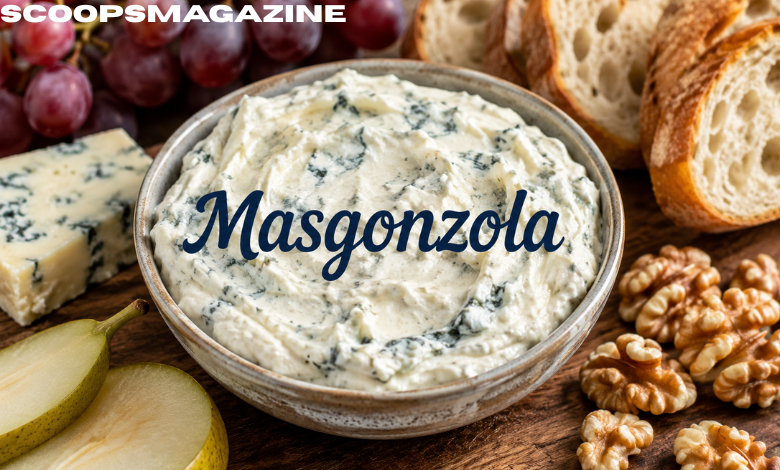
One of the first things people notice about Masgonzola is its texture. Instead of being firm enough for slicing, it usually has a soft, spreadable consistency. The mascarpone creates a silky body that makes it easy to spread with a knife. The color is generally off-white or pale cream with blue or green streaks inherited from the Gorgonzola. These veins are less dramatic than those found in traditional blue cheese because they are blended throughout the mixture. Its appearance makes it suitable for cheese boards where it contrasts nicely with harder cheeses.
Flavor Profile
The flavor of Masgonzola develops gradually rather than all at once. The first taste is dominated by creamy dairy richness. The mascarpone creates a buttery mouthfeel that coats the palate without feeling heavy. After a few moments, the Gorgonzola becomes more noticeable. It introduces mild saltiness, gentle tanginess, and the earthy notes associated with blue cheese. The finish is balanced rather than sharp. Many people who find traditional blue cheese overwhelming discover that Masgonzola offers a more comfortable introduction. No two products taste exactly alike because each producer uses different proportions of mascarpone and Gorgonzola.
Why People Choose Masgonzola
Many consumers enjoy Masgonzola because it offers a compromise between mild and bold cheeses. Someone who regularly eats cream cheese may appreciate its smooth texture, while experienced cheese lovers still recognize the familiar flavor of Gorgonzola. It also works well for entertaining because guests with different taste preferences often find it easier to enjoy than stronger blue cheeses. Its versatility makes it useful beyond cheese boards. The same container can be used for cooking, sandwiches, appetizers, and sauces.
Nutritional Overview
Like many dairy products, Masgonzola contains a combination of protein, fat, calcium, and vitamins. Because mascarpone is made primarily from cream, the blend generally contains more fat than many other cheeses. Gorgonzola contributes protein and minerals while also increasing sodium levels. Although nutritional values vary by brand, most servings provide:
- Protein
- Calcium
- Vitamin A
- Vitamin B12
- Dairy fats
- Phosphorus
Since it is relatively rich, many people use small portions rather than large servings. Checking the nutrition label remains the best way to understand the exact nutritional content of a specific product.
How to Serve Masgonzola
Masgonzola does not require complicated preparation. Many people simply allow it to sit at room temperature for fifteen to twenty minutes before serving. This softens the cheese and allows its flavors to become more noticeable.
It pairs well with:
- Fresh bread
- Crackers
- Toasted baguette slices
- Breadsticks
- Flatbread
Because it spreads easily, it can replace cream cheese or butter in many simple appetizers.
Using Masgonzola in Pasta
Masgonzola melts smoothly, making it suitable for pasta dishes.
Adding a few spoonfuls to freshly cooked pasta creates a creamy sauce with very little effort. The cheese melts into the heat without requiring flour or complicated preparation.
It works particularly well with:
- Penne
- Fettuccine
- Rigatoni
- Gnocchi
- Ravioli
Some cooks combine it with cream, black pepper, and herbs for a richer sauce, while others simply stir it directly into hot pasta.
Masgonzola on Pizza
Pizza is another popular use.
Instead of covering the entire pizza with Masgonzola, many chefs use small portions to provide pockets of creamy flavor.
It pairs especially well with:
- Mushrooms
- Caramelized onions
- Pear slices
- Walnuts
- Spinach
- Prosciutto
Because it melts quickly, it blends naturally with mozzarella.
Sandwiches and Burgers
Masgonzola works well as a spread.
Instead of mayonnaise or butter, it can be applied directly to bread before adding meats or vegetables.
It complements:
- Roast beef
- Turkey
- Chicken
- Grilled vegetables
- Burgers
The creamy consistency helps keep sandwiches moist while adding more flavor than ordinary spreads.
Cheese Boards
Cheese boards are among the easiest ways to enjoy Masgonzola.
It fits naturally alongside both mild and aged cheeses because it provides a different texture.
Popular pairings include:
- Grapes
- Pears
- Apples
- Figs
- Walnuts
- Almonds
- Honey
- Crackers
The sweetness of fruit balances the tangy notes from the Gorgonzola.
Cooking with Masgonzola
Masgonzola performs well in several cooked recipes.
It can be stirred into mashed potatoes, folded into risotto, added to baked vegetables, or melted into soups.
Because it already contains two different cheeses, it often eliminates the need to mix multiple dairy products.
Home cooks also use it in:
- Savory tarts
- Stuffed chicken
- Baked potatoes
- Cream sauces
- Vegetable casseroles
Foods That Pair Well with Masgonzola
Several foods naturally complement its flavor.
Fresh fruit balances the saltiness, while nuts contribute texture.
Common pairings include:
- Pears
- Apples
- Grapes
- Dried figs
- Honey
- Pecans
- Walnuts
- Hazelnuts
For savory meals, roasted vegetables such as asparagus, mushrooms, and potatoes also work well.
Storage Tips
Proper storage helps preserve both texture and flavor.
Keep Masgonzola refrigerated in its original packaging or transfer it to an airtight container after opening.
Because it is a soft cheese, exposure to air can dry the surface or allow unwanted odors from other foods to affect its taste.
Most manufacturers recommend consuming it within several days after opening.
Always check the expiration date and discard the cheese if mold develops outside the normal blue veins or if an unusual odor appears.
Is Masgonzola Suitable for Beginners?
Many people consider Masgonzola one of the easiest introductions to blue cheese.
Traditional Gorgonzola can seem intense for someone unfamiliar with blue cheeses. The mascarpone reduces that intensity without removing the characteristic flavor completely.
People who normally avoid blue cheese often find that Masgonzola offers a more balanced experience.
It allows them to become familiar with blue cheese flavors gradually instead of encountering the full strength immediately.
Masgonzola Compared with Gorgonzola
Although the two are closely related, they differ in several important ways.
Gorgonzola is aged and develops its flavor naturally through the blue mold process. Its taste can range from mild to very strong depending on the variety.
Masgonzola blends finished Gorgonzola with mascarpone. This creates a softer texture, milder taste, and richer consistency.
People seeking traditional blue cheese usually choose pure Gorgonzola, while those wanting a smoother experience often prefer Masgonzola.
Masgonzola Compared with Cream Cheese
Cream cheese and Masgonzola may appear similar because both are soft and spreadable.
However, cream cheese has a simple dairy flavor with slight acidity. Masgonzola introduces additional depth through the Gorgonzola.
This makes it more suitable for savory dishes where stronger flavor is desirable.
Cream cheese remains more common in desserts, while Masgonzola is generally used in savory recipes.
Common Misunderstandings
Some people believe Masgonzola is an officially recognized cheese variety like parmesan or mozzarella.
In reality, it is generally a blended cheese product rather than a separate traditional cheese with one standardized production method.
Another misconception is that every product tastes identical.
Manufacturers use different recipes, meaning one container may contain significantly more mascarpone while another emphasizes the Gorgonzola.
Reading the ingredient list provides the best indication of what to expect.
Buying Masgonzola
Masgonzola can often be found in supermarkets with specialty cheese sections or in Italian food stores.
When purchasing, examine:
- Ingredient list
- Production date
- Expiration date
- Storage instructions
- Cheese ratio if provided
Products labeled as “Gorgonzola with mascarpone” may offer the same style even if the word Masgonzola does not appear on the package.
Conclusion
Masgonzola combines the smooth richness of mascarpone with the recognizable flavor of Gorgonzola to create a cheese that appeals to a wide range of tastes. Its creamy texture, balanced flavor, and versatility make it useful for everything from simple snacks to complete meals. Whether spread on bread, stirred into pasta, added to pizza, or served on a cheese board, it provides a gentler introduction to blue cheese without losing the qualities that make Gorgonzola distinctive. Since recipes vary among producers, checking the label helps ensure you choose a version that matches your preferred level of creaminess and blue cheese flavor.