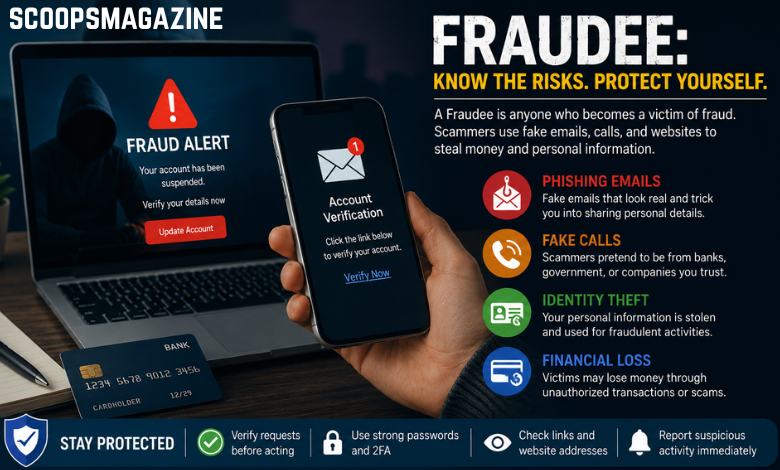
The word Fraudee refers to the person, business, or organization that becomes the victim of fraud. While discussions about scams often focus on criminals, the real impact is experienced by the fraudee. A single fraudulent transaction can lead to financial losses, stolen personal information, damaged trust, and weeks or even months spent recovering from the incident.
Fraud has existed for centuries, but digital technology has changed how criminals operate. Online banking, shopping, social media, email, and mobile applications have created new opportunities for fraudsters to reach victims. As a result, becoming a fraudee is no longer limited to people who ignore obvious warning signs. Many scams are carefully planned and designed to appear completely legitimate.
What Is Fraudee?
The term Fraudee combines the word fraud with the suffix -ee, which commonly describes the person receiving an action. In simple terms, a fraudee is the individual or organization that suffers because of fraudulent activity.
A fraudee may lose money directly through unauthorized transactions, or they may experience identity theft, stolen login credentials, compromised business information, or damaged reputation. Sometimes the financial loss is immediate. In other situations, the consequences appear weeks or months later when stolen information is used for additional crimes.
The word highlights the victim rather than the criminal, reminding people that fraud affects real individuals and businesses.
Why Anyone Can Become a Fraudee
Many people assume scams only work on those who lack experience with technology. In reality, fraud affects people from every age group, profession, and education level.
Modern scams rely less on technical tricks and more on human behavior. Criminals study how people react under pressure, how they trust familiar brands, and how quickly they respond to urgent situations.
Someone who carefully protects their bank account may still respond to a convincing work email. A business owner may approve a fake invoice because it resembles previous payments. Even cybersecurity professionals have occasionally reported receiving highly convincing phishing attempts.
Becoming a fraudee often has little to do with intelligence and much more to do with encountering a well-designed scam at the wrong moment.
How the Meaning of Fraudee Has Evolved
Years ago, fraud usually involved counterfeit checks, fake phone calls, or forged documents. Victims often met scammers in person or communicated through postal mail. Today, fraud has expanded into almost every digital platform. Email, text messages, messaging apps, social media, online marketplaces, gaming platforms, and business collaboration tools all present opportunities for criminals.
As online services became more common, the number of potential fraudees increased. People now manage finances, healthcare, education, shopping, entertainment, and work through digital accounts. Every online account represents a possible target for fraud.
Common Ways People Become a Fraudee
Fraud occurs through many different methods. Criminals constantly modify their techniques to avoid detection and improve success rates.
Some of the most common methods include:
Phishing Emails
Phishing emails imitate trusted companies and encourage recipients to click links, download files, or enter passwords.
These emails often claim that:
- Your account has been suspended.
- A payment failed.
- Your password needs updating.
- A package delivery requires confirmation.
- A tax refund is waiting.
The goal is to convince the recipient to voluntarily provide sensitive information.
Fake Phone Calls
Telephone scams remain effective because hearing a human voice creates trust.
Scammers may pretend to represent:
- Banks
- Government agencies
- Technical support departments
- Insurance companies
- Delivery services
The caller often creates urgency, encouraging immediate action before the victim has time to verify the information.
Identity Theft
Identity theft occurs when criminals collect enough personal information to impersonate someone else.
This information may include:
- Full name
- Date of birth
- National identification numbers
- Bank details
- Credit card information
- Login credentials
Identity theft can lead to unauthorized loans, fraudulent purchases, or fake accounts opened under another person’s name.
Romance Scams
Romance scams usually begin through dating websites or social media platforms. The scammer spends weeks or months building trust before requesting financial assistance. They may claim to face medical emergencies, travel problems, investment opportunities, or family crises.
Victims often believe they are helping someone they genuinely know.
Fake Job Offers
Employment scams target people searching for work.
Fraudsters may advertise attractive positions with high salaries while requesting:
- Application fees
- Training payments
- Equipment purchases
- Identity documents
- Banking information
In many cases, the promised job never existed.
Investment Scams
Investment fraud promises unusually high returns with little or no risk.
Examples include:
- Fake cryptocurrency projects
- False stock opportunities
- Nonexistent real estate investments
- Ponzi schemes
- Fake trading platforms
The scam often appears successful initially before the operator disappears with investors’ money.
Businesses Can Also Become Fraudees
Individuals are not the only victims.
Companies of every size regularly become fraudees through sophisticated financial crimes.
Business fraud may involve:
- Fake supplier invoices
- Payroll fraud
- Email account compromise
- Vendor impersonation
- Stolen customer databases
- Fake executive payment requests
Even large organizations with dedicated security departments experience successful fraud attempts each year.
Why Modern Scams Look Convincing
Modern fraud is built on research and preparation.
Scammers frequently gather information from:
- Company websites
- Social media profiles
- Public records
- Previous data breaches
- Online directories
- News articles
This information helps criminals personalize their messages.
Instead of generic emails, victims may receive messages containing:
- Their full name
- Employer information
- Recent purchases
- Correct bank names
- Partial account numbers
- Accurate addresses
The additional details make fake communications appear authentic.
Warning Signs That May Prevent Becoming a Fraudee
Although scams have become more convincing, several warning signs remain common.
Watch for situations involving:
- Requests for immediate payment.
- Pressure to act without verification.
- Unexpected password reset notifications.
- Unknown attachments.
- Suspicious website addresses.
- Requests for verification codes.
- Payment using gift cards or cryptocurrency.
- Unexpected banking requests.
Any request involving personal or financial information deserves careful verification.
Psychological Techniques Used by Fraudsters
Fraud depends heavily on psychology.
Criminals understand how emotions influence decision-making.
Common techniques include:
Urgency
Victims are told they have only minutes or hours to respond.
The pressure reduces careful thinking.
Fear
Scammers threaten:
- Account suspension
- Legal action
- Arrest
- Lost packages
- Financial penalties
Fear often encourages immediate compliance.
Authority
Many criminals pretend to represent respected organizations.
People naturally trust:
- Banks
- Government agencies
- Police departments
- Employers
- Technology companies
Authority makes fake requests appear legitimate.
Rewards
Promises of:
- Prize winnings
- Lottery payments
- Tax refunds
- Investment profits
- Discount offers
can encourage people to overlook warning signs.
Financial Effects of Becoming a Fraudee
The most obvious consequence is financial loss.
Depending on the fraud type, victims may lose:
- Personal savings
- Retirement funds
- Business revenue
- Investment accounts
- Credit card balances
Recovery may require lengthy investigations involving banks, payment providers, insurance companies, and law enforcement.
Some victims recover only part of their losses.
Emotional Impact on a Fraudee
Financial damage is only one part of the experience.
Many fraud victims also report:
- Stress
- Anxiety
- Embarrassment
- Loss of confidence
- Anger
- Difficulty trusting others
People sometimes blame themselves even when the scam was highly sophisticated.
Businesses may also experience damaged customer confidence after fraud incidents.
Identity Theft and Long-Term Problems
Identity theft often continues long after the original fraud.
Criminals may use stolen information to:
- Open new financial accounts.
- Apply for loans.
- Commit tax fraud.
- Register businesses.
- Access healthcare services.
- Create fake online identities.
Victims often spend significant time correcting financial records and proving their identity.
How Organizations Protect Potential Fraudees
Many organizations invest heavily in fraud prevention.
Common security measures include:
- Multi-factor authentication
- Fraud monitoring systems
- Behavioral analysis
- Transaction verification
- Account alerts
- Device recognition
- Login notifications
These systems reduce fraud risk but cannot eliminate it completely.
Users still play an important role in protecting their accounts.
Steps to Take If You Become a Fraudee
Quick action can reduce further damage.
Important steps include:
- Contact your bank immediately.
- Change affected passwords.
- Enable multi-factor authentication.
- Report unauthorized transactions.
- Monitor account activity.
- Save evidence of suspicious communications.
- Inform affected companies.
- Report identity theft where appropriate.
- Monitor credit reports if available.
- Warn family members if personal information has been exposed.
Acting quickly often limits additional financial losses.
How to Reduce the Risk of Becoming a Fraudee
No security method guarantees complete protection, but good habits significantly lower risk.
Useful practices include:
Use Strong Passwords
Every important account should have a unique password.
Password managers can help generate and store secure passwords.
Enable Multi-Factor Authentication
Additional verification greatly reduces unauthorized access.
Even if a password is stolen, criminals may still fail to enter the account.
Verify Requests Independently
Instead of clicking links inside emails, visit the company’s official website directly or contact customer service using verified contact information.
Review Financial Statements
Regularly checking bank and credit card transactions helps identify suspicious activity quickly.
Keep Software Updated
Operating systems, browsers, and applications receive security updates that fix known vulnerabilities.
Limit Public Information
Sharing excessive personal information online helps scammers build convincing attacks.
Privacy settings should be reviewed regularly.
Fraud Prevention in the Workplace
Organizations should educate employees because many attacks begin with staff members.
Training should include:
- Recognizing phishing emails
- Verifying payment requests
- Reporting suspicious messages
- Protecting confidential information
- Confirming vendor changes
- Safe password practices
Regular awareness programs reduce successful fraud attempts.
The Role of Technology in Fraud
Technology supports both criminals and defenders.
Fraudsters use automation to send millions of phishing messages.
Organizations use machine learning to identify unusual account activity.
Banks monitor transaction patterns for suspicious behavior.
Email providers filter malicious messages before they reach users.
Security technology continues improving, but criminals also adapt their methods.
Social Media and Fraudee Risks
Social media platforms provide valuable information for scammers.
Public profiles may reveal:
- Birthdays
- Family members
- Employment history
- Travel plans
- Contact information
- Personal interests
This information can strengthen phishing attacks or identity theft attempts.
Limiting public visibility reduces unnecessary exposure.
Why Reporting Fraud Matters
Some victims avoid reporting fraud because they believe nothing can be recovered.
However, reporting incidents helps:
- Financial institutions block suspicious transactions.
- Companies identify new fraud methods.
- Law enforcement investigate criminal networks.
- Security researchers improve protection.
- Other potential victims receive warnings.
Reporting also creates official records that may assist during recovery.
The Future of Fraud and Fraudees
Fraud techniques will continue changing as technology evolves. Artificial intelligence, deepfake audio, realistic fake websites, and automated messaging systems allow criminals to create increasingly convincing scams. At the same time, financial institutions and technology companies continue investing in stronger fraud detection systems. The ongoing challenge is maintaining public awareness while improving digital security. Individuals and businesses that stay informed, verify unexpected requests, and adopt good security habits remain better prepared against evolving fraud methods.
Conclusion
A Fraudee is the person or organization that suffers the consequences of fraud. While criminals constantly develop new ways to deceive their targets, understanding how scams operate remains one of the strongest forms of protection. Fraud is not limited to one age group, profession, or industry, and anyone who uses digital services can become a target. Reducing the risk begins with careful verification, secure online habits, and responding quickly whenever suspicious activity appears. Staying alert, protecting personal information, and reporting fraudulent activity help limit damage and contribute to a safer digital environment for individuals and businesses alike.